
A Body-Based Approach to Transformation
The deepest transformation is not changing your emotions. It is changing the relationship you have with yourself. That relationship shapes the way you experience every part of your life.
A Somatic Approach to transforming the relationship you have with yourself through the wisdom of the body
Most approaches to emotional change work at the level of thought — understanding patterns, reframing beliefs, or building new habits. This work begins somewhere else: in the body.
Inner Connexion works directly with emotional patterns as they are experienced and held in the body, rather than only understood in the mind.
The Inner Connexion Method is an integrative approach to transformation that brings together Focusing, Somatic Attachment Therapy, embodied awareness practices, nervous system-informed work, and contemplative traditions.
Rather than asking, “How can I change myself?” this work asks:
“How can I begin relating differently to what I experience?“
Because lasting transformation doesn’t come from becoming someone else.
It comes from changing the relationship you have with yourself.
The foundations of the work
At the heart of this approach is Focusing — the original six-step process developed by philosopher and psychotherapist Eugene Gendlin.
This foundation is integrated with Somatic Attachment Therapy, embodied awareness practices, and nervous system-informed somatic work to support emotional transformation through direct experience rather than analysis alone.
Somatic Attachment Therapy works with the relational and nervous-system patterns formed early in life, building the inner safety from which emotional experience can be met without overwhelm.
Together, these approaches help you develop a deeper relationship with yourself by working with emotional experience as it is lived in the body.
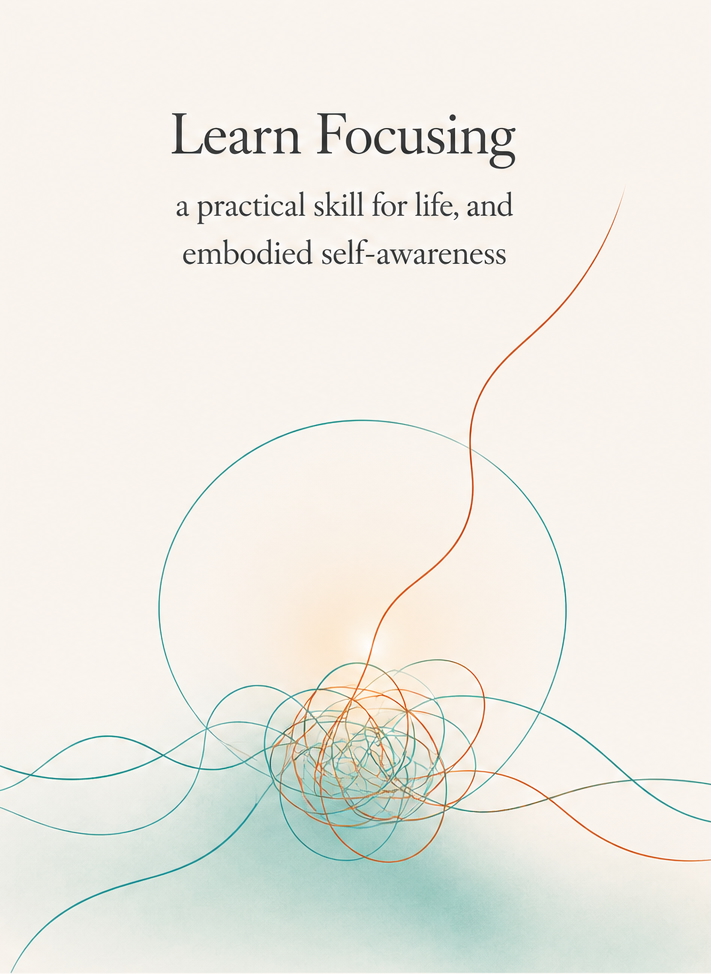
How emotional patterns shape the relationship you have with yourself
Emotional patterns are not simply thoughts or psychological habits. They are lived experiences carried in the body over time.
They may appear as self-criticism, burnout and over-functioning, emotional dysregulation, chronic anxiety, emotional eating, or a persistent sense of disconnection from yourself.
Rather than treating these experiences as problems to eliminate, this work meets them as intelligent adaptations that can be understood and gradually transformed through embodied awareness.
How change happens
Change here does not come from effort, reframing, or self-correction.
It emerges through sustained, supported contact with experience as it is actually happening — in sensation, in the body, in this moment. It is sustained through establishing a deeper connection with yourself.
As your relationship with your inner experience begins to change, emotional patterns start to reorganise naturally. Greater clarity, inner connection, emotional steadiness and equanimity begin to emerge.
Not through fixing yourself, but through changing the way you meet yourself.
Many approaches focus on changing symptoms. Inner Connexion focuses on transforming the relationship beneath them — the relationship you have with yourself.
What this supports over time
▴ A more compassionate and grounded relationship with yourself
▴ Greater self-trust and emotional resilience
▴ Less stress, self-criticism, and emotional reactivity
▴ Greater clarity in how you think, feel, and respond
▴ Greater confidence in your inner direction
▴ Feeling more at home within yourself

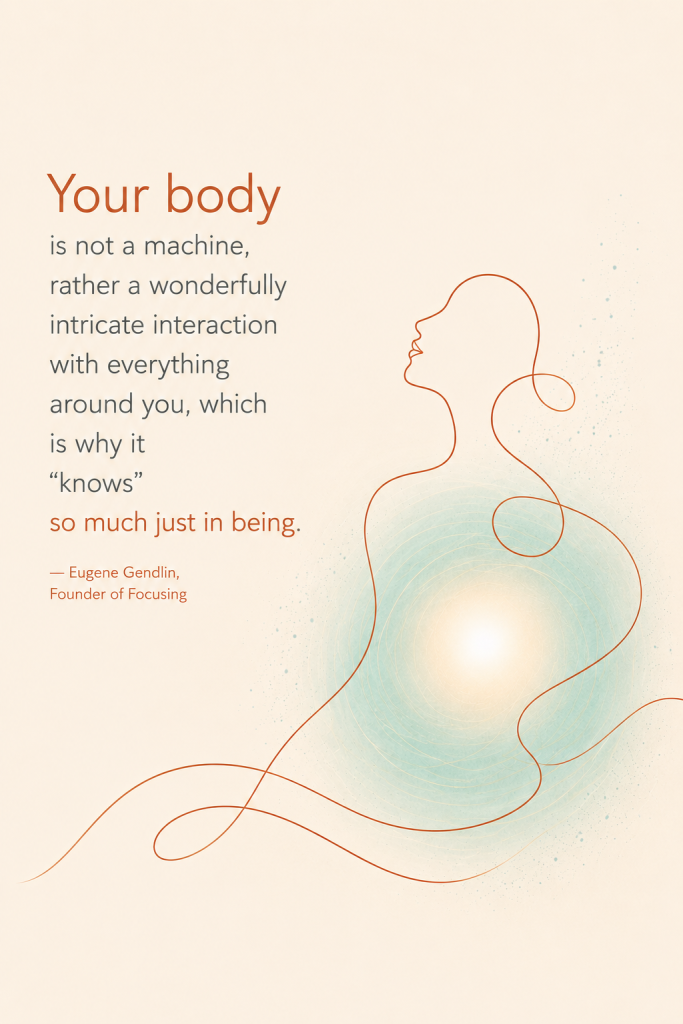
A return to yourself
Inner Connexion is not a method of self-improvement.
It is a practice of relationship — with sensation, emotion, and the deeper intelligence of the body.
A practice of meeting yourself with awareness rather than judgment.
A return to presence.
A return to yourself.
Whether through 1:1 Inner Connexion Sessions, Focusing training, or retreats, this work offers a practical path towards greater emotional clarity, self-trust, and a more compassionate relationship with yourself.